
Product Overview
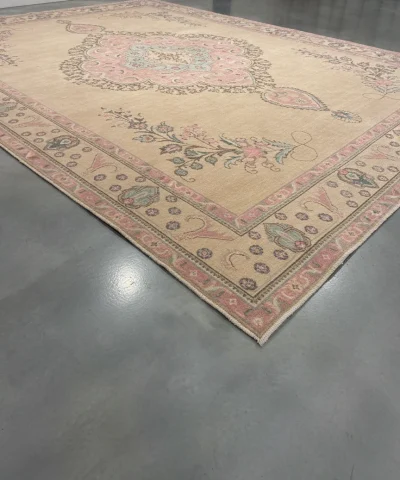
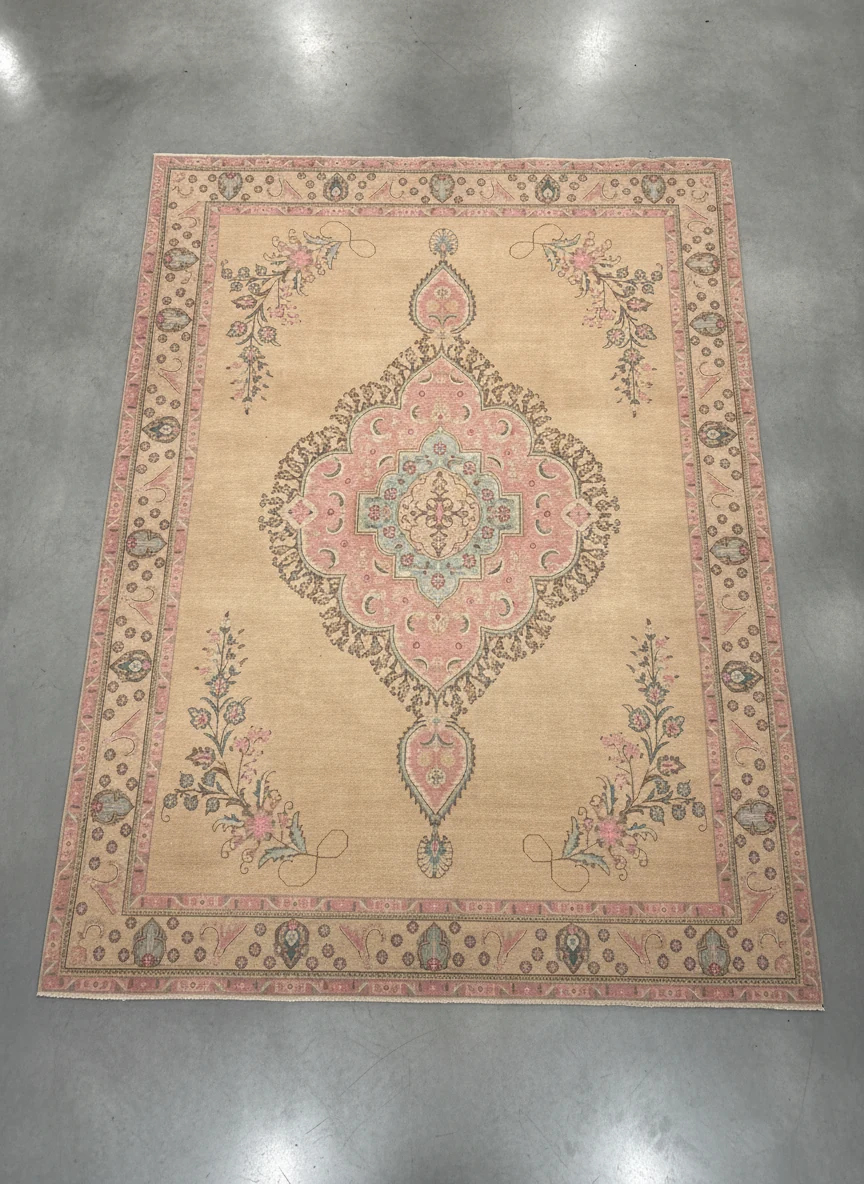
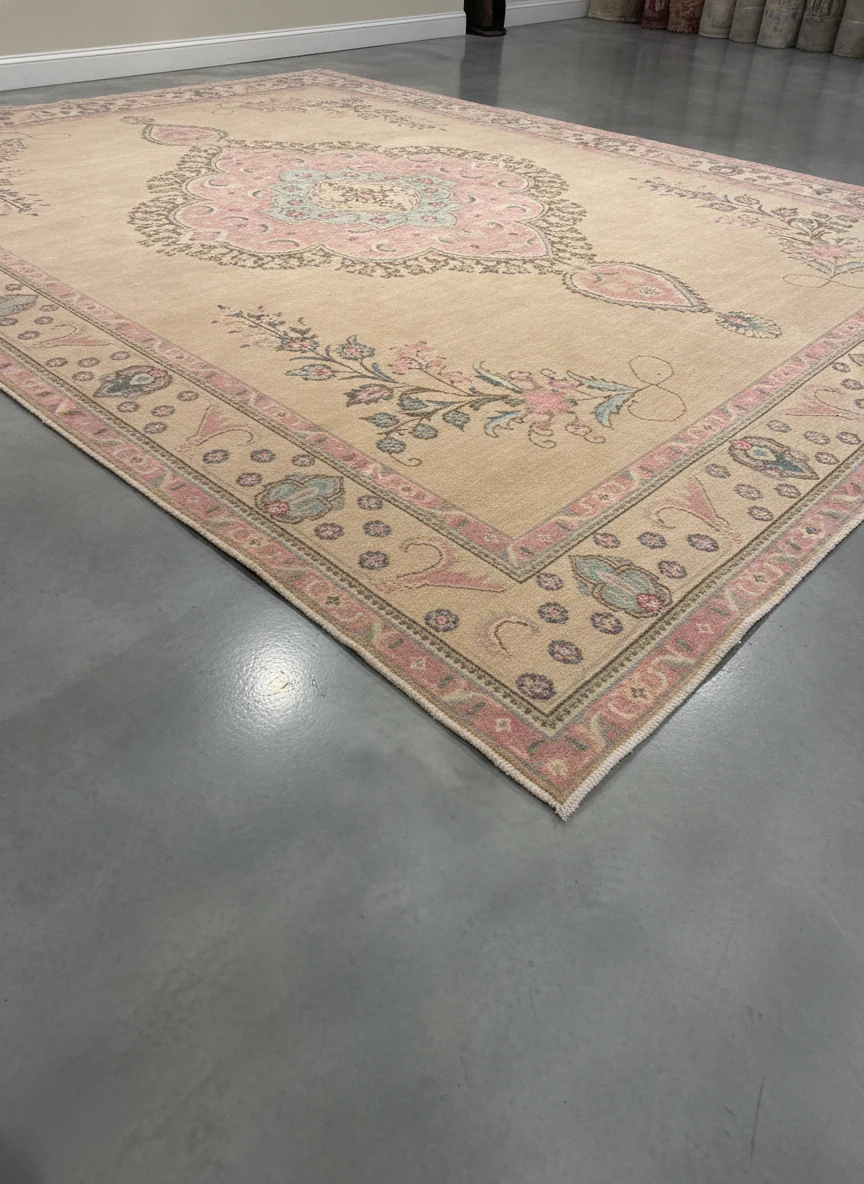
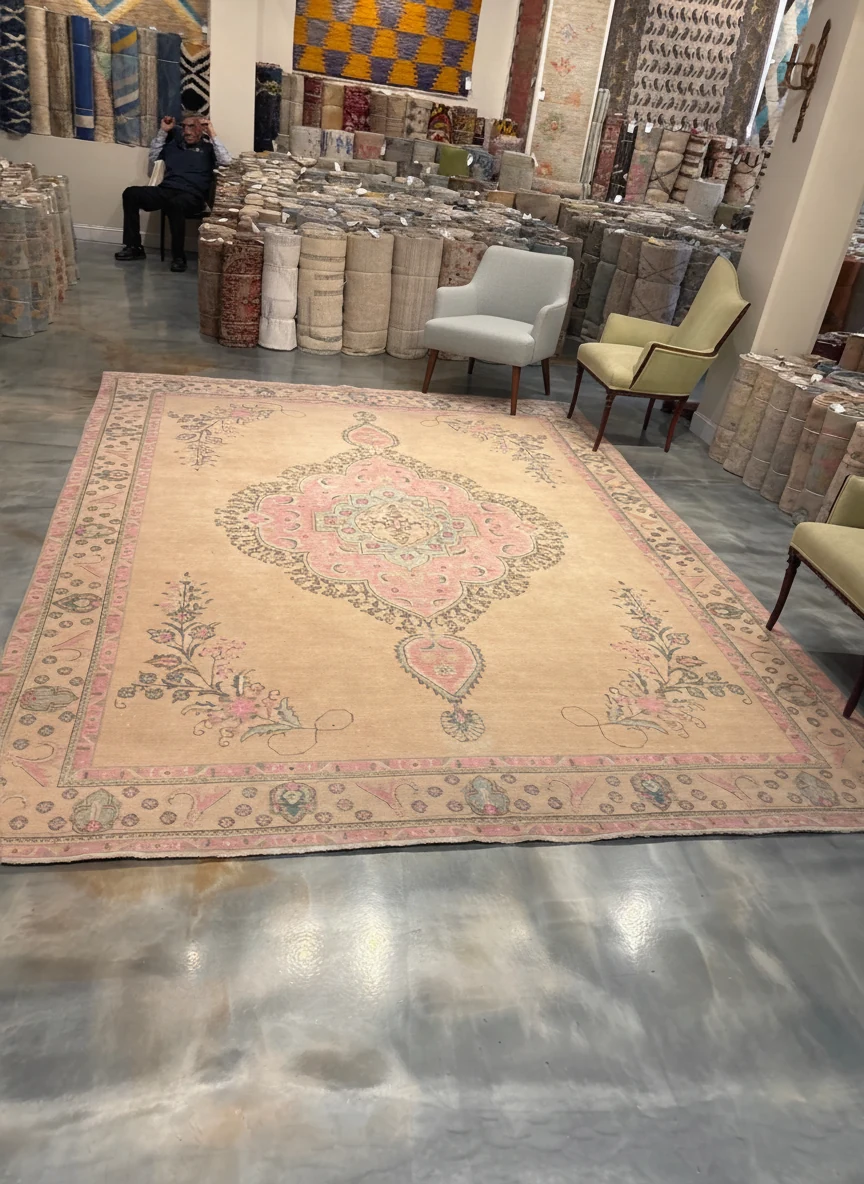
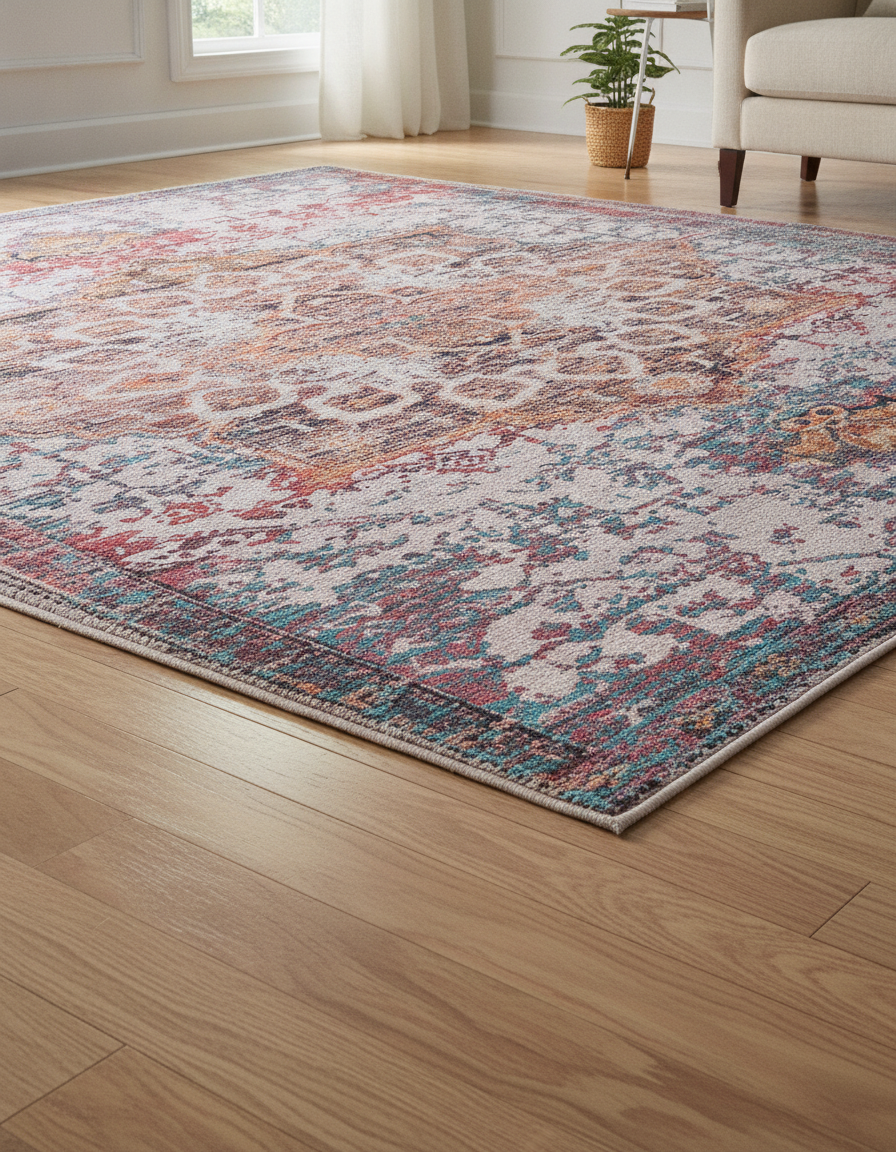
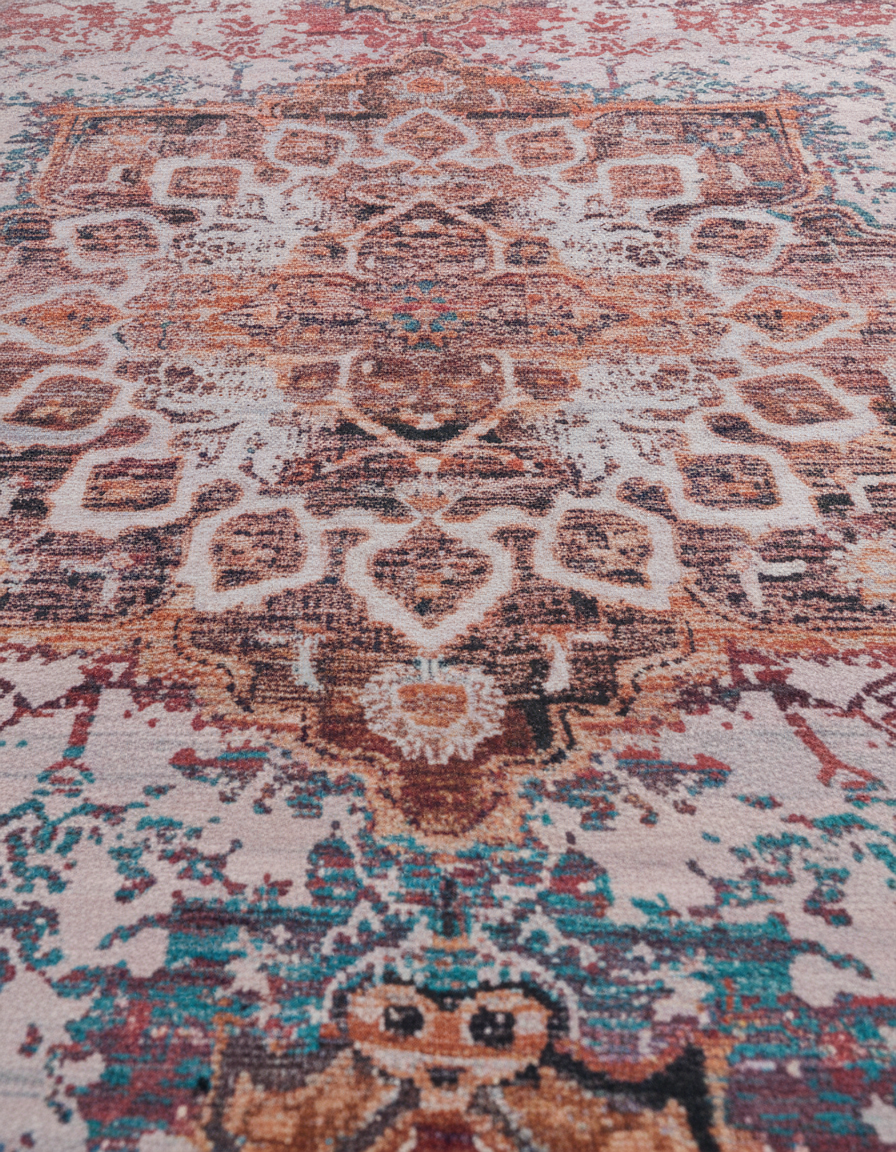
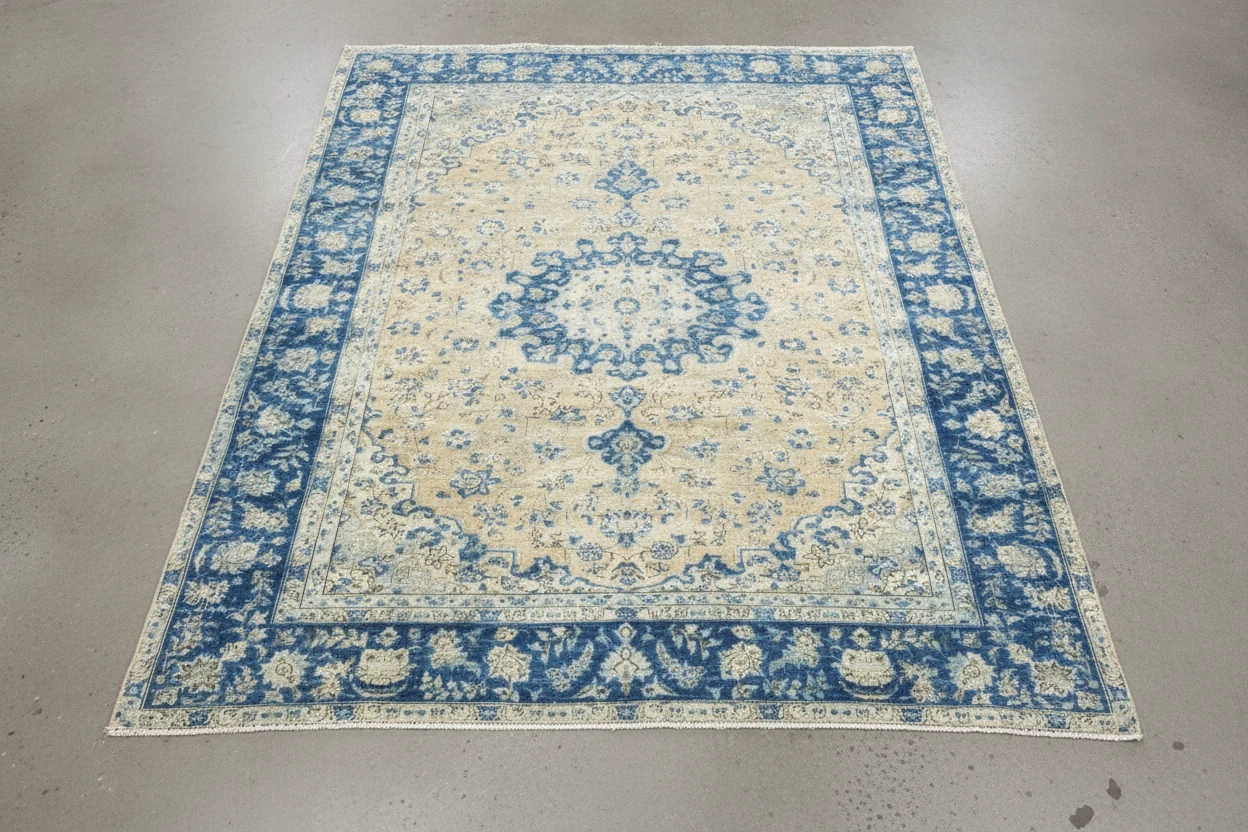
This substantial 9×12 Persian Tabriz area rug presents a traditional design well-suited for a variety of interior settings. Based on the supplied photograph, the rug features a prominent central medallion framed by an ornate field of curvilinear floral motifs. A series of detailed borders complement the field, showcasing the refined pattern work characteristic of Persian weaving styles.
The visible palette includes a primary soft beige or pale yellow tone that provides a warm, neutral foundation. Accents of soft pink, muted light blue, and subtle greens complete the design, contributing to an overall gentle and balanced aesthetic. The classic layout and generous dimensions make this rug a focal point for larger rooms.
Verified Product Details
- Size
- 9×12 feet
- Origin
- Persian
- Region
- Tabriz
- Style
- Persian
- Shape
- Rectangular
- Pattern
- Medallion, Floral
Color and Design Notes
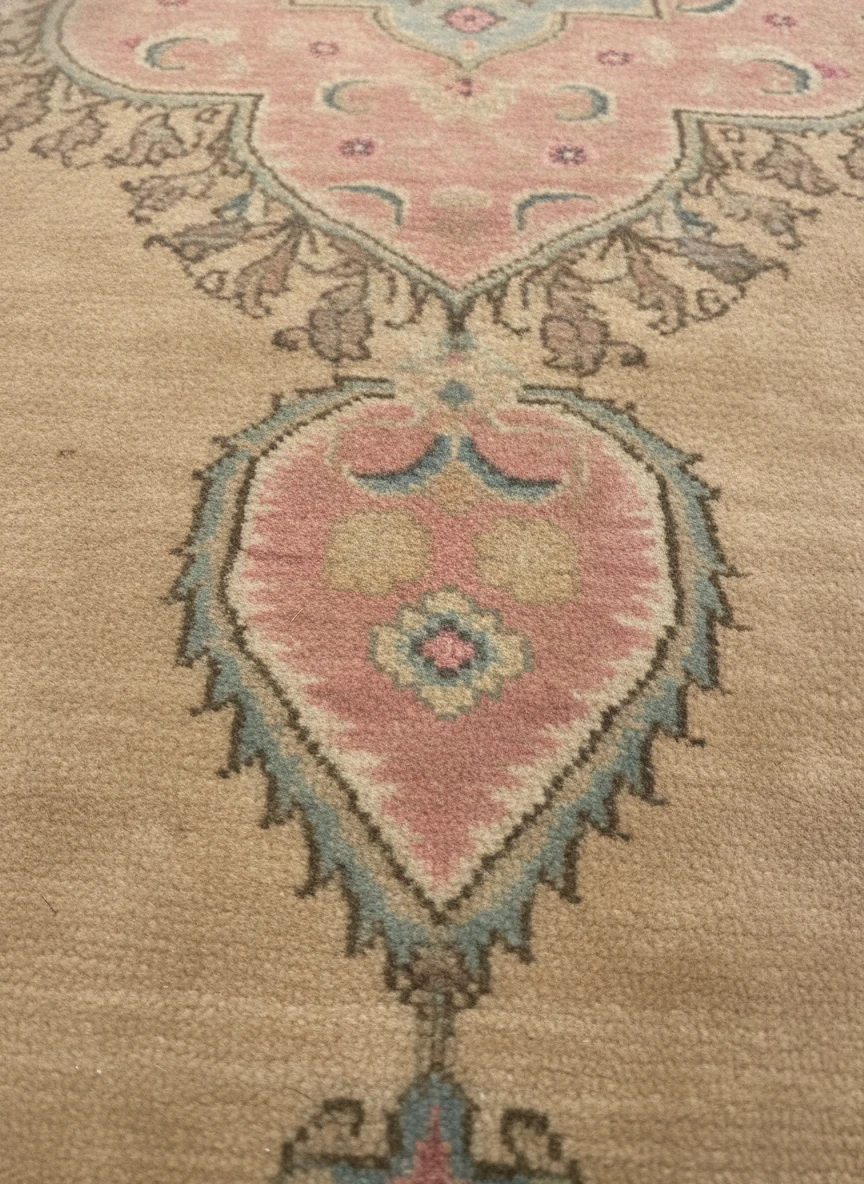
The rug’s design is dominated by a central medallion, which is intricately detailed with floral and curvilinear elements. The field around the medallion is filled with sprawling vine-and-flower patterns, leading to ornate spandrels in each corner. The main border features repeating stylized motifs, flanked by narrower guard borders that echo the palette.
Visually, the main field color is a light, warm beige or pale yellow, offering a bright yet soft base. The decorative elements are rendered in shades of delicate pink, a muted light blue, and hints of sage green, creating a harmonious and understated color scheme with visible contrast between the field and the design elements.
Interior Designer Recommendation
Ideal Rooms
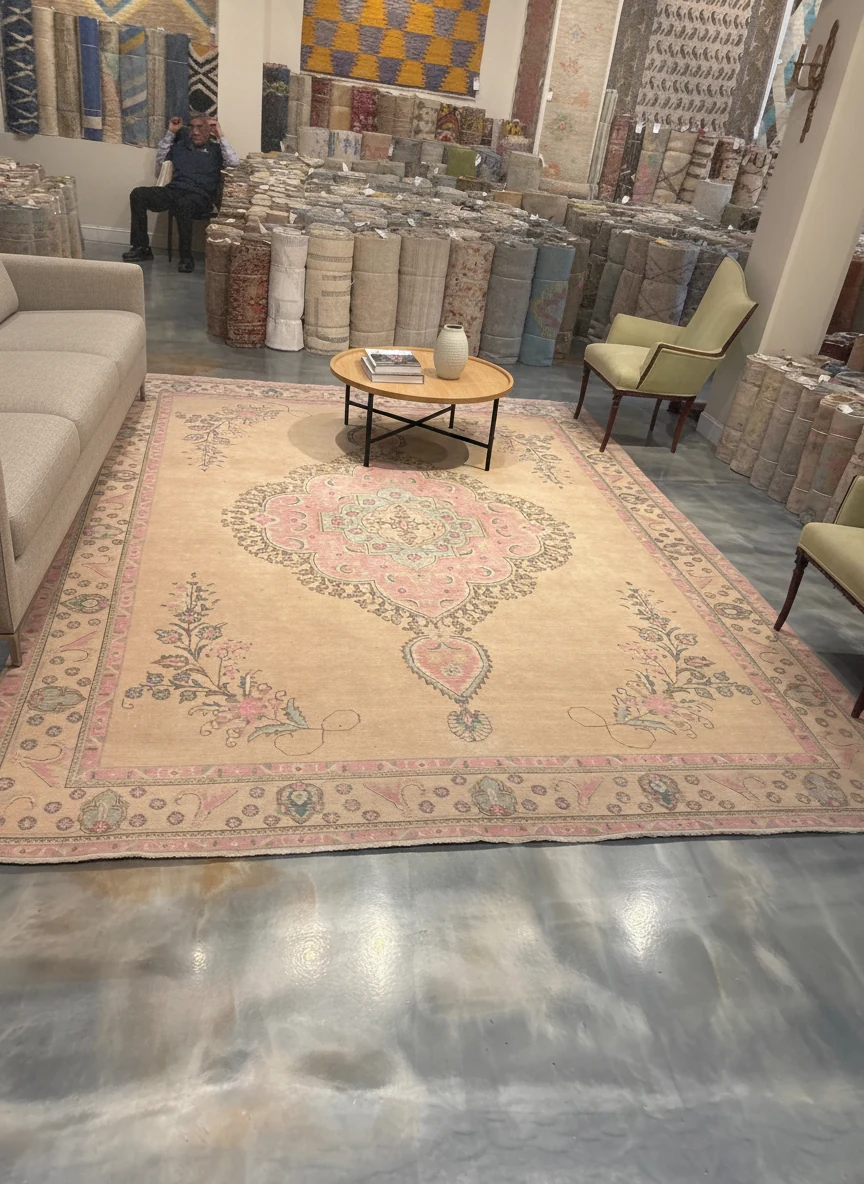
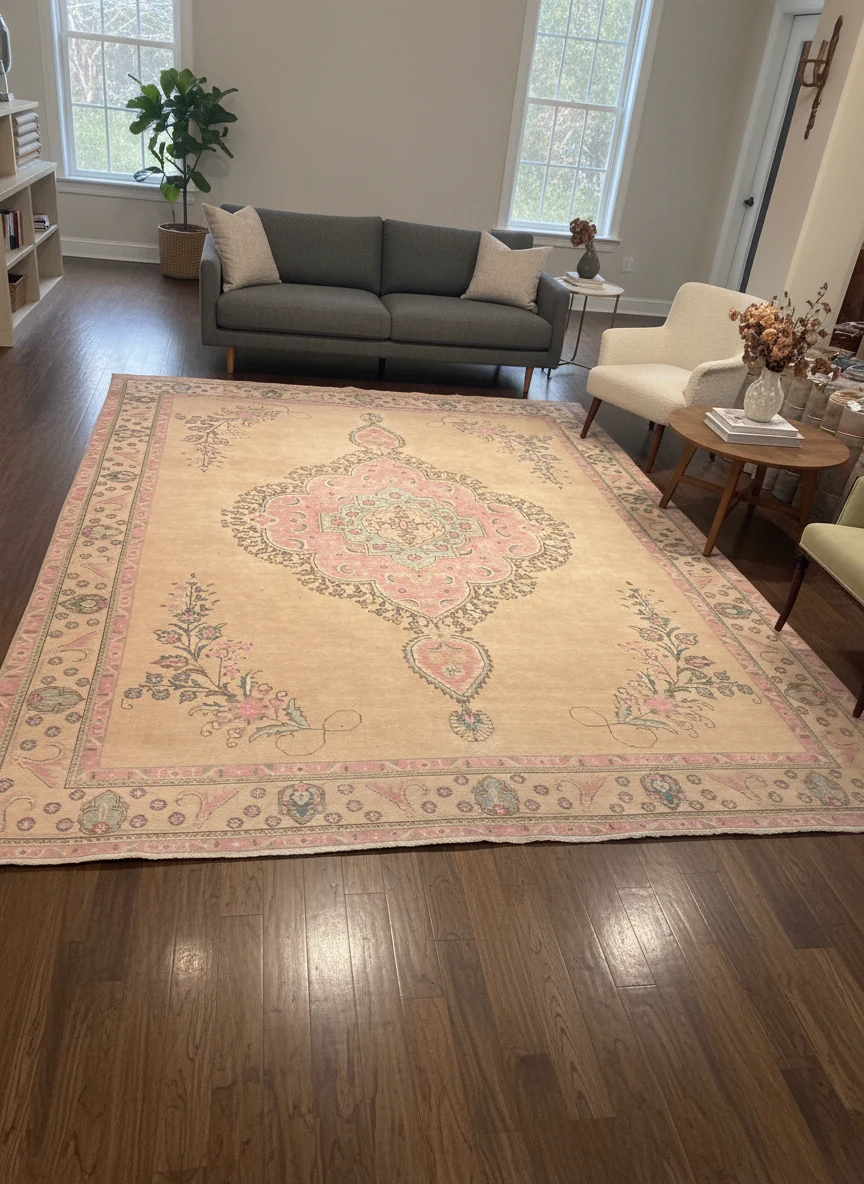
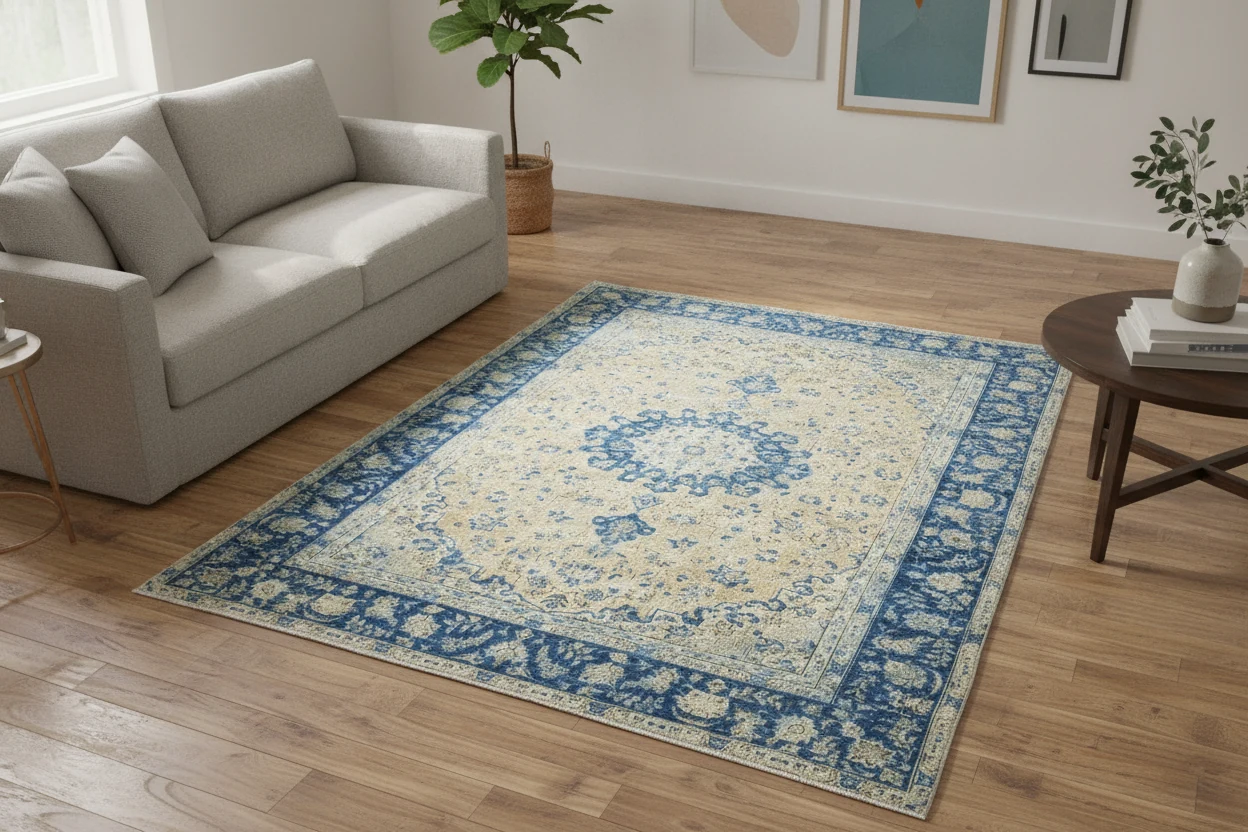
This 9×12 rug is ideally suited for spacious main living areas, formal dining rooms, or large master bedrooms because its substantial size requires ample space to display its full design without being overwhelmed by furniture. The traditional design and gentle color palette also lend themselves to creating a serene atmosphere in these key rooms.
Recommended Wall Colors
Consider pairing this rug with warm off-white, light greige, soft dusty rose, or muted sage walls. These colors complement the visible palette by providing a subtle backdrop that allows the rug’s intricate details to stand out, while also harmonizing with its inherent warmth and traditional aesthetic.
Suitable Interior Styles
This rug fits well within Traditional, Transitional, and Eclectic interior styles. It grounds a Traditional space with its classic Persian motifs and balanced design; it can soften a Transitional room by introducing heritage elements, and its rich pattern makes it an excellent anchor for an Eclectic design by providing a layer of refined visual interest.
Furniture & Décor Pairings
Pair this rug with furniture in dark wood tones like walnut or mahogany, or with pieces featuring painted finishes in cream or soft gray, because these selections will complement the rug’s traditional feel. Upholstery in natural linen, pale pink, or muted blue fabrics, along with brushed brass or black iron metal accents, will enhance the rug’s subtle color palette and add visual depth.
Atmosphere Created
This rug creates a Collected, Serene, and Warm atmosphere. Its intricate traditional patterns and soft, faded palette evoke a sense of history and curated elegance, promoting a calm and inviting environment where subtle beauty can be appreciated.
Buying Information
For optimal enjoyment and to help preserve the rug’s life, we recommend using a properly sized rug pad underneath. This will help prevent slipping, provide additional cushioning, and protect both your rug and your flooring.
Frequently Asked Questions
- How should I measure my room to ensure this 9×12 rug fits appropriately?
- To determine if this 9×12 rug is the right size, measure your room and consider the arrangement of your furniture. In living areas, ensure the rug is large enough for the front legs of major furniture pieces to rest on it. In dining rooms, the rug should extend at least 24 inches beyond the dining table on all sides, allowing chairs to remain on the rug when pulled out.
These images and this description were generated by AI from the merchant’s original rug photo. Refer to the merchant for any authoritative product details.
Reviews
There are no reviews yet.